

7 Live Streaming Monetization Platforms Compared for 2026
Last Updated: November 4, 2026
Quick Summary
Comparing live streaming monetization platforms comes down to two numbers: the revenue share the platform keeps and the payout threshold it requires before paying you. Typical splits range from 50-70% for subscriptions to 70-80% for pay-per-view, with thresholds from $25 to $100. Model total take-home after processing, conversion, and tax withholding before committing.
- A $100 threshold sounds trivial until a creator earning $80 a month waits five months.
- A $1,000 gross month can net roughly $675 after platform share, withdrawal fee, and conversion spread.
- At the pre-monetization stage, a $25 to $50 threshold beats a 70% revenue share you cannot reach.
- A flat $5 withdrawal fee is 5% on a $100 payout and 0.5% on a $1,000 payout.
- Keep an email list or community channel you own so platform dependency never becomes a single point of failure.
Table of Contents
- Platform Comparison: Revenue Share and Payout Thresholds at a Glance
- Live Streaming Monetization Strategies That Actually Pay
- Platform Fees and the Fine Print on Payout Thresholds
- Streaming Gear Requirements for Monetization Eligibility
- Audience Retention and Latency: What Platform Data Tells You
- Multi-Streaming and Platform Portability: Keeping Your Options Open
- How to Choose the Right Platform for Your Creator Stage
- Building Your Streaming Setup with Perfect Take Gear
- Frequently Asked Questions
Platform Comparison: Revenue Share and Payout Thresholds at a Glance
Comparing live streaming monetization platforms starts with two numbers most guides bury at the bottom: what the platform keeps, and when it actually pays you. The live-streaming market hit $115.2 billion in 2025 and is projected to reach $658.7 billion by 2033, according to Grand View Research's live streaming market report, which means more platforms are competing for creators than ever. Perfect Take Gear tracks this closely because the gear on your desk and the platform you stream on have to work together.
| Platform Type | Typical Revenue Share to Creator | Payout Threshold | Best For |
|---|---|---|---|
| Subscription-first | 50-70% of subscription revenue | $50-$100 | Creators with loyal repeat viewers |
| Ad-supported | 45-55% of ad revenue | $100 | High-volume, broad-audience channels |
| Tip and virtual currency | 60-80% after processing | $25-$50 | Live engagement and direct support |
| Pay-per-view | 70-80% of ticket price | $50 | One-off events and special broadcasts |
Every platform writes its own terms, and the fine print is where creators lose money.
Live Streaming Monetization Strategies That Actually Pay
Live streaming monetization is the practice of converting live viewers into revenue through subscriptions, tips, ads, or paid events. Most creators stack two or three of these rather than relying on one. The market's growth from $97.39 billion in 2026 to $318.56 billion by 2031, per Mordor Intelligence's market analysis, reflects how many revenue paths now exist.
Subscriptions, Tips, and Ad Revenue Compared
Subscriptions pay the most predictable income: viewers commit monthly, and the platform takes its revenue share before the rest reaches you. Tips arrive faster but swing with live engagement. Ad revenue rewards scale, small until concurrent viewers climb, then growing quickly.
- Subscriptions: steady, forecastable, best once subscriber count stabilizes
- Tips and virtual currency: instant gratification, no minimum audience
- Ad revenue: slow start, strong at high concurrent viewers
Virtual Currency and Pay-Per-View Models
Virtual currency lets viewers buy platform coins and spend them on cheers or gifts; the conversion rate from coin purchase to creator payout is where platforms differ most, and it is rarely advertised clearly. Pay-per-view works for ticketed events with a defined start time. Both reward creators who build community rather than chase raw numbers.
Platform Fees and the Fine Print on Payout Thresholds
Payout thresholds are the minimum balance a platform requires before releasing earnings, and they are the single most common source of creator frustration. A $100 threshold sounds trivial until a creator earning $80 a month waits five months. Some platforms hold balances indefinitely if a threshold is never met, and a few apply inactivity clauses that reclaim dormant funds.
Fees stack in ways creators miss: the headline revenue share, then payment processing, then currency conversion, then tax withholding. A platform advertising a generous split can net less than a competitor with a smaller headline number and no processing fee. Read the terms for these four items before committing:
- The exact revenue share percentage, per revenue type
- The payout threshold and payout schedule
- Any processing, conversion, or withdrawal fees
Calculating Actual Take-Home Pay
Most guides stop at the headline split. The number that matters is what lands in your account.
Worked example using illustrative numbers, substitute your platform's actual terms: a creator earns $1,000 gross for the month. The platform keeps 30%, leaving $700. A 2% withdrawal fee leaves $686.
Run the same math for each platform before you sign up: gross revenue × (1 − platform share) × (1 − processing fee) × (1 − conversion spread) = net before tax.
Payout Schedules and Minimums in Practice
Payout schedules fall into three patterns: monthly, biweekly, and on-demand. Monthly is the most common and slowest; a creator who crosses the threshold on the first may not see the money until the end of the following month. Biweekly cuts the wait roughly in half. On-demand payouts let creators withdraw whenever the balance clears the threshold, usually for a per-withdrawal fee.
Minimum withdrawal amounts interact with schedules in a way that catches new creators. If the threshold is $100 and the schedule is monthly, a creator earning $60 a month waits two months for the first payout and then receives $120 minus fees. At $40 a month, the balance never clears and the money sits, or an inactivity clause applies.
Tax Withholding and Reporting
Tax treatment is the part of the fine print creators read last and regret first.
Withholding is not the same as taxation. Amounts withheld for incomplete identification can be credited against your tax liability when you file, but you will not have that cash during the year.
Watch out: some platforms report gross earnings to tax authorities while paying you net after fees, which means your reported income can exceed what you actually received.
The Hidden Costs of International Payouts
Creators who stream to a global audience often earn in multiple currencies, and the payout path adds cost at each hop: a platform may hold earnings in one currency, convert at its own exchange rate, and send to a bank that applies an incoming wire fee. Each hop is a small percentage, but the total can exceed the headline revenue share difference between two platforms.
A common pattern is to compare two platforms on revenue share alone, pick the higher split, then discover the payout path costs more than the split saves. Model the full path: platform share, conversion spread, withdrawal fee, and bank receiving fee. If the platform pays out in your local currency at a fixed rate, compare that rate against the mid-market rate to see the spread you are paying; if not, budget for the conversion cost explicitly.
A Fee Audit Checklist
Before committing to any platform, pull its terms and answer these questions in writing:
- What is the revenue share for each income type, subscriptions, tips, ads, and pay-per-view?
- What is the payout threshold, and does the balance expire?
- What is the payout schedule, and how long does a payout take to arrive?
If the threshold is unreachable at your current monthly revenue, the revenue share is irrelevant. That single check eliminates most bad platform choices before the fee math even starts.
Streaming Gear Requirements for Monetization Eligibility
Streaming gear requirements for monetization vary by platform, but the pattern is consistent: platforms want broadcast quality that keeps viewers watching. Most eligibility programs look at resolution, audio clarity, and stream stability.
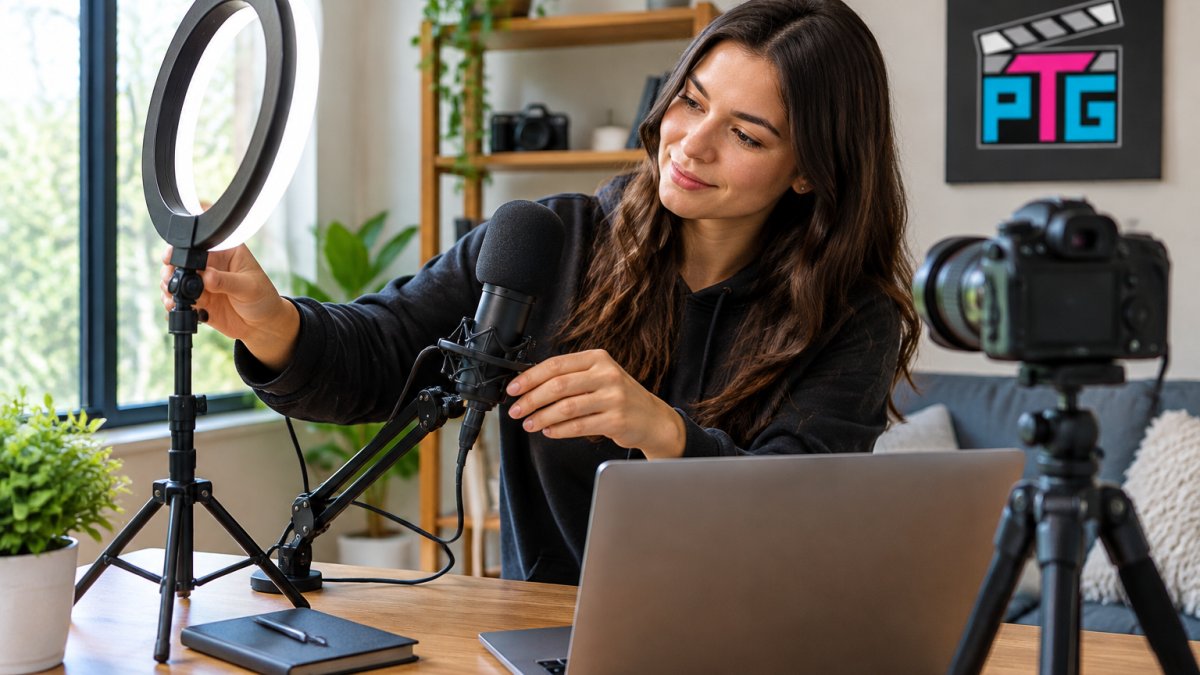
Audio matters more than video here. Creators comparing microphone options for dual setups can review streaming microphones for dual PC setups, and anyone rebuilding their lighting should look at choosing the right light stands for streaming.
Audience Retention and Latency: What Platform Data Tells You
Latency is the delay between an action on stream and the viewer seeing it, and it directly affects audience retention. Low-latency modes keep chat responsive during live engagement; higher-latency modes buffer better on weak connections. Platforms trade one for the other, and real-time analytics usually show the cost.
Streams Charts reports 31.7 billion hours watched across tracked platforms in Q3 2026, per Streams Charts platform analytics, so retention differences of a few percent translate into enormous audience shifts. Check three metrics in your dashboard: average watch time, drop-off point, and chat participation rate. Creators who want deeper tactics can read how to keep an audience engaged on a live stream.
Multi-Streaming and Platform Portability: Keeping Your Options Open
Platform exclusivity contracts trade reach for guaranteed revenue, and they are rarely worth it early on. Multi-streaming to two or three platforms multiplies discovery without multiplying production work, though encoding multiple outputs demands more from your streaming software and upload bandwidth.
Portability matters more than most creators expect. Audience lists, VOD libraries, and subscriber relationships do not always transfer when a creator switches platforms.
How to Choose the Right Platform for Your Creator Stage
Match the platform to your creator lifecycle stage, not to the biggest revenue share number. The right choice at 50 concurrent viewers is usually wrong at 5,000, and the criteria shift as revenue grows.
Stage 1: Pre-Monetization (0 to First Payout)
The goal at this stage is not maximizing revenue share, it is clearing the first payout threshold as fast as possible so you learn how the platform actually pays. Priorities, in order:
- Low payout threshold. A $25 to $50 threshold beats a 70% revenue share you cannot reach.
- Fast payout schedule. Biweekly or on-demand payouts shorten the feedback loop.
- Low or no processing fees on small withdrawals. A flat $5 fee is 10% of a $50 payout.
At this stage, exclusivity contracts are almost never worth it. The guaranteed revenue is small relative to the audience you give up, and the terms usually outlast the stage you signed them in.
Stage 2: Growth (Stable Monthly Payouts)
The goal shifts to predictability and compounding. Subscriptions become the backbone because they forecast month to month, and ad revenue starts to matter as concurrent viewers climb. Priorities shift:
- Subscription revenue share and churn tools. A platform that helps you retain subscribers is worth more than a slightly higher split on a shrinking base.
- Sponsorship access. Platforms with brand partnership programs or creator marketplaces open revenue that does not depend on viewer count alone.
- Analytics depth. Average watch time, drop-off points, and chat participation rates tell you where to invest production time.
This is the stage where the fee math starts to dominate. A 5% difference in total take-home on a $5,000 month is $250, enough to justify switching platforms if the migration cost is low.
Stage 3: Established (Negotiating from Strength)
The goal is leverage. At this stage you have audience data, a track record of payouts, and options. Priorities:
- Negotiated terms. Revenue share, payout schedule, and exclusivity are negotiable at volume; ask.
- Exclusivity evaluation. An exclusivity contract is worth signing only if the guaranteed revenue exceeds what you would earn multi-streaming to your second and third platforms, after accounting for the audience you cannot reach.
- Platform risk management. Diversify so no single platform's algorithm change or ban can zero out your income.
The Switch Decision
Switching platforms is a cost, not a free move. Before migrating, estimate the migration cost: audience lists that do not transfer, VOD libraries that stay behind, subscriber relationships that reset, and the ramp period while the new platform's algorithm learns your channel.
Watch out: platform exclusivity contracts sometimes include clauses that survive termination, such as non-compete windows or content ownership terms. Read the termination section before signing, not after.
Decision Checklist by Stage
- Confirm the payout threshold is reachable at your current monthly revenue
- Check the revenue share per income type, not just the headline rate
- Verify multi-streaming is permitted under the terms
Building Your Streaming Setup with Perfect Take Gear
A monetization-ready setup does not require a studio budget. The MAONO PD100W dynamic USB microphone offers cardioid pickup, adjustable noise reduction, and tap-to-mute, covering the audio requirement most platforms care about. For video, the Emeet Pixy wireless 4K webcam adds AI tracking and HDR for cleaner framing without a camera operator.


Start with audio and light, confirm your gear clears the platform's quality bar, then add cameras and modifiers as revenue grows.
Frequently Asked Questions
Which live streaming monetization platform pays the most?
There is no single winner because payout depends on how you earn. Platforms that let viewers tip or subscribe directly often return a higher share than ad-supported models, but they require an existing audience. The live streaming market is growing quickly, so competition among platforms is pushing revenue shares upward. Compare the revenue share, payout threshold, and payment schedule side by side before committing.
How many concurrent viewers do I need to earn $1,000 per month?
The math depends on your monetization strategy. If you rely on subscriptions, multiply your tier price by the share the platform keeps, then divide $1,000 by that net amount to see how many subscribers you need. Ad revenue works differently because it scales with watch time, not viewer count alone. Live streaming platforms carry a large amount of ad inventory. Run your own numbers using each platform's published revenue share rather than guessing.
Do I need a professional studio setup to qualify for platform monetization?
Most platforms set eligibility rules around follower count, watch hours, and account standing, not gear quality. That said, streaming gear requirements for monetization matter in practice because poor audio and lighting hurt audience retention, which slows your path to eligibility. A clear microphone, a key light, and a stable camera are enough to start. Perfect Take Gear offers starter kits designed for new creators.
Are there hidden fees when using third-party streaming monetization tools?
Yes, and they usually appear in three places: a percentage cut of each transaction, a flat payout fee, and a currency conversion charge if your viewers pay in another currency. Some tools also hold funds until you cross a minimum payout threshold, which can delay access to your money for weeks. Read the fee schedule before you sign up and calculate your net take-home pay on a sample month. Multi-streaming tools may add another subscription cost on top of platform fees.
The platforms will keep changing their splits and thresholds. Your gear and your owned audience will not. Build the setup once, keep the audience list, and let the platforms compete for you. Get started with Perfect Take Gear and build a streaming setup that meets monetization standards from day one.
