

Why Professional Studio Gear Matters for Creators
Table of Contents
- The Real Impact of Professional Studio Gear on Output Quality
- Essential Recording Studio Equipment List for Creators
- Professional vs Consumer Audio Gear: Where Differences Matter
- How Gear Impacts Your Production Workflow and Creative Output
Last Updated: August 23, 2026
The Real Impact of Professional Studio Gear on Output Quality
Professional studio gear directly shapes content quality. The difference between amateur and professional equipment lies in how gear influences the entire creative process, from capture to delivery. Quality equipment maintains signal-to-noise ratio, preserves dynamic range, and captures authentic transient response that consumer gear often misses.
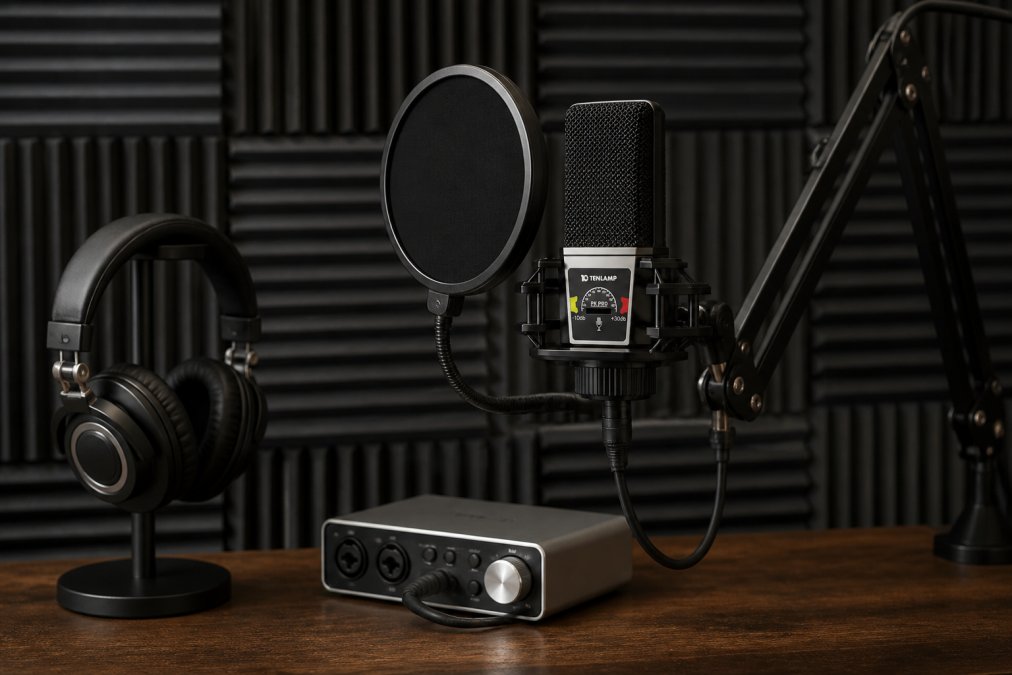
According to the Audio Engineering Society's professional standards guide, professional-grade equipment maintains measurable specifications that directly impact production value. Perfect Take Gear helps creators understand this distinction by offering Cameras, Lighting & Audio Equipment designed to bridge the gap between beginner setups and professional installations.
Essential Recording Studio Equipment List for Creators
Every professional studio needs core components working together as an integrated system. A large-diaphragm condenser microphone with phantom power support captures vocal nuance and instrument detail. The cardioid pickup pattern isolates direct sound while rejecting ambient room noise, fundamental for content creation in untreated spaces.
An audio interface acts as the bridge between analog and digital domains, directly impacting latency, bit depth, and sample rate. Professional interfaces maintain low noise floors and clean preamp gain staging that preserves dynamic range.
Studio headphones enable accurate monitoring during recording and mixing. Professional monitoring headphones deliver flat frequency response that reveals problems rather than masking them, preventing mixing decisions based on colored audio reproduction.
Acoustic treatment addresses the physical environment. Absorptive materials placed strategically reduce reflections without expensive room reconstruction, dramatically improving recording clarity.
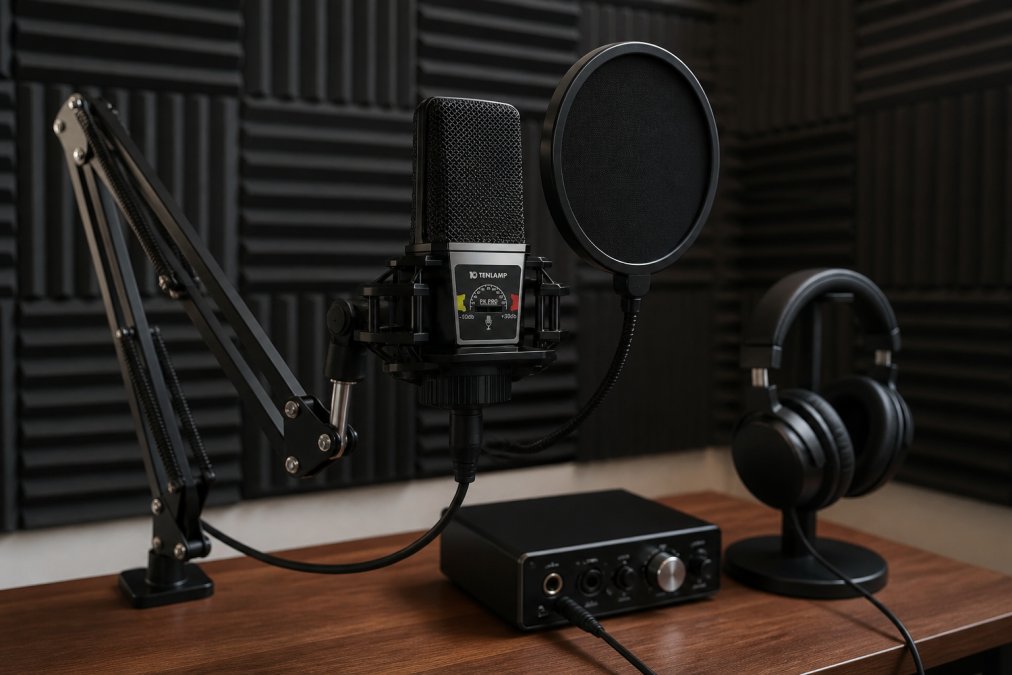
The Tenlamp PKPRO large-diaphragm condenser microphone combines dual-circuit design with phantom power compatibility, supporting both USB and XLR workflows for creators transitioning to more sophisticated signal chains.

Professional vs Consumer Audio Gear: Where Differences Matter
Consumer gear prioritizes affordability; professional equipment prioritizes sonic accuracy and reliability under consistent use. Consumer microphones often emphasize presence peaks in the 2-5kHz range to make voices sound brighter. Professional microphones maintain flatter response curves that capture original tone without coloration, critical because colored recordings become problematic during mixing and mastering.
Noise floor specifications separate professional from consumer interfaces. Professional audio interfaces maintain signal-to-noise ratio above 100dB, keeping recorded content clean even at low input levels (aes.org). Consumer interfaces often struggle below 90dB, introducing audible hiss that degrades production value.
Build quality determines longevity. Professional equipment uses metal chassis and quality connectors designed for daily use, while consumer equipment often fails after moderate use. The workflow efficiency gained from reliable equipment justifies the initial investment.
When clients observe professional-grade equipment in a studio, they perceive higher production value before hearing a single sample, influencing their confidence in the final product.
How Gear Impacts Your Production Workflow and Creative Output
Professional studio gear removes friction from the creative process. Reliable equipment stays out of the way, allowing focus to remain on performance and creativity rather than technical workarounds.
Signal chain efficiency directly affects how quickly creators move from concept to finished product. Professional equipment integrates seamlessly, XLR connections maintain clean audio, phantom power delivers consistent gain, and monitoring latency stays below perceptible thresholds.
Room acoustics interact with equipment choice to create synergy or conflict. Professional monitoring headphones reveal acoustic problems that consumer speakers mask. Once identified, targeted acoustic treatment becomes more effective because professional monitoring accurately reflects improvements.
The workflow efficiency gained from professional gear translates directly into creative output volume. When technical barriers disappear, creators produce more content, experiment more freely, and develop skills faster.
According to the Professional Audio Manufacturers Association's equipment standards, professional-grade studio equipment demonstrates measurable performance advantages in consistency and reliability. The Maono PD200X dynamic microphone provides dual USB and XLR connectivity, supporting creators whose workflows evolve.
A quality microphone and interface represent non-negotiable foundations. Acoustic treatment addresses environmental problems that degrade everything else. Monitoring headphones enable accurate decision-making. Each component serves a specific function that directly affects output quality.
Professional studio gear matters because it enables creators to capture, process, and deliver content reflecting their actual skill and vision. Equipment removes technical barriers that compromise creative expression. Investing in professional-grade tools through Perfect Take Gear's Content Creator Gear & Equipment establishes a foundation supporting growth from beginner through advanced creator levels. Quality gear simplifies workflow, improves monitoring accuracy, and builds client confidence through visible professionalism.
Frequently Asked Questions
Does expensive professional studio gear actually make a difference in audio quality?
Yes, but with diminishing returns. Professional audio gear reduces noise floor, improves signal-to-noise ratio, and captures transient response more accurately than consumer equipment. A quality condenser microphone with phantom power and proper preamp handling will produce noticeably cleaner recordings. However, the biggest gains come from upgrading from entry-level to mid-range gear; spending more on high-end gear produces smaller quality jumps than upgrading from basic equipment.
What are the most important pieces of equipment for a home studio?
A quality microphone, audio interface, studio headphones, and acoustic treatment form your signal chain foundation. Your microphone captures sound; your audio interface converts it cleanly; your headphones let you monitor accurately; and acoustic treatment controls room reflections. Without all four, you'll struggle with production workflow efficiency. Many creators start with a large-diaphragm condenser mic like the Tenlamp PKPRO, which offers dual-circuit connectivity and noise cancellation at an accessible price point.
At what point should a creator upgrade to professional-grade equipment?
Upgrade when your current gear limits your creative output or client perception. If your audio sounds thin, your lighting looks flat, or your workflow feels slow, professional gear helps. However, master your current setup first, technical proficiency matters more than equipment cost. Most creators see meaningful returns upgrading microphones, lighting, and monitoring accuracy before moving to high-end preamps or mixing consoles.
This article was written using GrandRanker