

7 Costs of Renting Professional Studio Equipment
Last Updated: October 27, 2026
Quick Summary
Renting professional studio equipment costs between $75 and $400 per hour at most recording studios, with half-day sessions running $200 to $900 and full days starting at $300. Gear-only rentals are priced per item per day, and add-on fees for insurance, deposits, delivery and tax can push the total higher. Budget a 20% buffer above the quoted rate so the final invoice doesn't surprise you.
- Weekly gear multipliers cluster around 3x the daily rate, so anything above 4x is worth questioning.
- A refundable security deposit typically equals 10-25% of the gear's replacement value.
- Insurance or damage waivers often add 10-15% of the rental fee to your total.
- Use break-even sessions = purchase price divided by daily rental rate to decide whether to rent or buy.
- Photograph the gear at pickup and note existing damage on the contract before you leave.
Table of Contents
- What Renting Professional Studio Equipment Actually Costs
- Recording Studio Equipment Rental Rates by Gear Type
- Podcast Studio Equipment Rental Cost for Solo Creators
- Hidden Fees and Rental Terms That Change the Total
- Rent or Buy Studio Equipment: A Break-Even Framework
- Your Studio Equipment Rental Checklist Before You Book
- Build Your Own Kit Instead of Renting Every Session
- Frequently Asked Questions
What Renting Professional Studio Equipment Actually Costs
Renting professional studio equipment costs between $75 and $400 per hour at most recording studios, according to ProStudioTime's 2026 studio rate guide. Half-day sessions run $200 to $900 (Recording Studio Rates: Complete 2026 Cost Guide). Full days start at $300. This guide breaks down those numbers so creators can budget before they book.
The hourly figure may not cover everything. Gear-only rentals, engineer time, and add-on fees can change the total.
Studio equipment rental means paying a facility or rental house for temporary access to microphones, lights, cameras, and recording gear. The price depends on three things: what you rent, how long you need it, and whether a person operates it for you.
Below are cost ranges, potential fees, and a framework for deciding whether to rent or buy.
The Three Rental Models You'll Encounter
Rentals can take different forms, and pricing can vary.
- Hourly studio time: You book a room with gear included. Rates land in that $75 to $400 range. A minimum booking, often two to four hours, usually applies.
- Equipment-only rental: You take the gear elsewhere. Pricing is per item, per day. This suits creators who already have a space.
- Full-service production: Gear, engineer, and producer come as a package. Labor costs push the total well above the gear rate alone.
Know which model you're pricing before you compare quotes.
Recording Studio Equipment Rental Rates by Gear Type
Professional studio gear for creators spans a huge range, from a basic microphone to a full lighting rig. For an overview of professional studio gear for creators, including microphones, lighting, cameras, and audio interfaces, see the full guide.
Here's a working estimate table for equipment-only rentals, quoted per day with typical weekly multipliers. Rates assume a single item, standard accessories, and a refundable security deposit collected at pickup:
| Gear Type | Typical Daily Rate | Typical Weekly Rate | Notes |
|---|---|---|---|
| Condenser microphone (large-diaphragm) | $25-$75 | $75-$225 (3x daily) | Premium tube models cost more; shock mount and pop filter usually included |
| Dynamic microphone (broadcast) | $15-$40 | $45-$120 | Often bundled free with podcast room bookings |
| Audio interface (2-channel) | $20-$60 | $60-$180 | Channel count and preamp quality drive price |
| Studio monitors (pair) | $30-$80 | $90-$240 | Room size and stands matter; stands often billed separately |
| LED lighting kit (2-light) | $40-$120 | $120-$360 | Output and CRI affect rate; softboxes and stands usually included |
| Camera body (mirrorless, full-frame) | $75-$250 | $225-$750 | Sensor size and brand drive cost; batteries and cards extra |
| Cine lens (prime) | $50-$150 | $150-$450 | Fast primes and anamorphics sit at the top of the range |
| Tripod or C-stand | $10-$30 | $30-$90 | Heavy-duty stands cost more; sandbags often a small add-on |
| Grip kit (flags, diffusion, clamps) | $35-$90 | $105-$270 | Priced as a bundle at most rental houses |
- Weekly multipliers cluster around 3x the daily rate. A $100/day camera that rents for $300/week is normal; anything above 4x is worth questioning.
- Bundles beat à la carte. A camera body plus two lenses plus a tripod booked as a package typically lands 10-20% below the sum of individual line items.
- Deposits scale with replacement value. Expect a refundable hold roughly equal to 10-25% of the gear's retail price, returned after inspection.
- Minimum rental periods apply to gear, too. Many houses bill a one-day minimum even for a two-hour pickup, and weekend pickups on Friday often bill through Monday.
IBISWorld's 2026 industry report puts the motion picture and theatrical equipment rental market at $3.0 billion, which tells you how much gear moves through rental houses every year, and why rate cards vary so much between markets.
A Worked Total: One-Day Solo Shoot
Numbers on a rate card are not a budget.
| Line Item | Cost |
|---|---|
| Mirrorless camera body | $150 |
| Prime lens | $75 |
| LED 2-light kit | $80 |
| Tripod | $20 |
| Wireless lav mic | $35 |
| Damage waiver (12% of gear) | $43 |
| Delivery and pickup | $40 |
| Total | $443 |
What Drives the Daily Rate Up or Down
- Gear age and condition. Current-generation bodies and freshly serviced lenses command premium rates; previous-generation gear is often 30-40% cheaper.
- Brand and mount ecosystem. Mainstream mounts rent cheaper because supply is deep; niche cinema mounts cost more.
- Accessories included. A body that ships with two batteries, a charger, and a card is a better deal than a bare body at the same rate.
- Season and demand. Rates tighten around wedding season, conference season, and year-end production crunches.
Podcast Studio Equipment Rental Cost for Solo Creators
If you're weighing rental against ownership, audio equipment guides for solo creators can help you compare what a personal setup would cost.
Photography Lighting Kit with Umbrellas and Background Stand →
Hidden Fees and Rental Terms That Change the Total
- Insurance or damage waiver: Often 10-15% of the rental fee, sometimes capped per item. Some houses require it; others let you substitute a certificate of insurance from your own policy.
- Security deposit: Refundable, typically 10-25% of the gear's replacement value, held on the card at pickup and released after inspection. On a $3,000 camera package, expect a $300-$750 hold.
- Cleaning fees: Common on lighting and camera gear, usually $25-$75 per item, charged only if gear returns visibly soiled.
- Late return charges: Usually billed hourly up to a full-day rate, then escalated. A one-hour late return on a $100/day item can cost $15-$25.
- Delivery and setup: $40-$150 each way depending on distance and gear volume; some houses charge a flat trip fee plus mileage.
- Cancellation and rescheduling: Many contracts forfeit the deposit inside 48-72 hours of pickup; some charge 50% inside 24 hours.
- Sales tax: Applies to the rental fee in most states; rates vary by jurisdiction and are added at checkout.
- Restocking or re-rigging fees: Charged when a kit returns with missing accessories or in a different configuration, often $20-$50.
Terms That Bite Harder Than the Fees
- Damage beyond the waiver. A waiver covers accidental damage, not negligence or loss. Theft and water damage are frequently excluded, and you may be liable for full replacement value.
- Missing accessories. A lost lens cap is trivial; a missing battery or card can trigger a restocking fee larger than the item's value.
- Return condition clauses. Some contracts require gear returned in the same cases and configuration, with a cleaning charge if not.
- Automatic renewal. Weekly rentals sometimes auto-renew unless you confirm return in writing before the renewal date.
How to Keep the Total Predictable
- Get an itemized quote in writing that lists the gear rate, waiver, deposit, delivery, and tax as separate lines.
- Photograph or video the gear at pickup and note existing damage on the contract before you leave.
- Confirm the return window in writing, including whether a weekend counts against the rental period.
- Ask whether your own insurance qualifies in place of the house waiver, it can cut 10-15% off the total.
- Budget a 20% buffer above the quoted rate for waivers, delivery, and tax so the invoice doesn't surprise you.
Rent or Buy Studio Equipment: A Break-Even Framework
The rent-or-buy decision can depend on how often you need the gear.
Use this simple break-even formula:
Break-even sessions = Purchase price ÷ Daily rental rate
A quick decision framework:
- Rent if: You need gear once or twice a year, or you need a specialty item for one shoot.
- Buy if: You'll use it monthly, you want consistent gear, or rental fees would exceed the purchase price within a year.
- Buy a starter kit if: You're new and building a repeatable setup. Perfect Take Gear's starter lighting kits cover the basics without a rental contract.
Your Studio Equipment Rental Checklist Before You Book
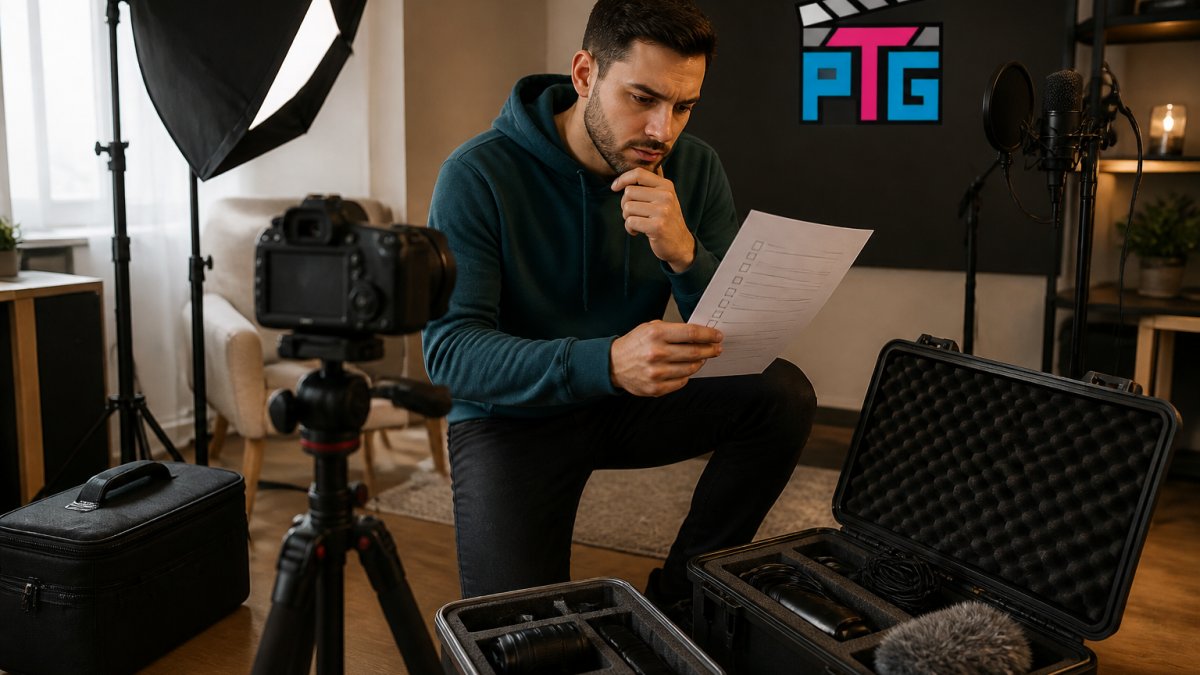
Run this checklist before you pay a deposit. Building your core creator kit offers a practical formula for your first mic, light, and tripod.
- Confirm the exact gear list, model numbers included
- Ask whether an engineer or operator is required
- Check the minimum booking and cancellation terms
- Get the insurance and damage waiver cost in writing
- Verify pickup, return, and late-fee rules
- Test the gear on arrival and note existing damage
- Confirm delivery and setup fees
Build Your Own Kit Instead of Renting Every Session
A studio lighting kit with umbrellas and a backdrop stand costs $149.99. A 135W studio light kit at $110.99 offers stepless dimming from 1-100% and a CRI above 95.

Perfect Take Gear provides creator gear and equipment, including cameras, lighting, and audio equipment. How to build a home content studio walks through lighting, audio, cameras, and ergonomics from scratch. The catalog includes affordable tools, professional-grade studio modifiers and lighting, and starter kits designed for new creators.
Frequently Asked Questions
How much does it cost to rent professional studio equipment?
The total depends on whether you are renting the room, the gear, or both.
Is it cheaper to rent or buy studio equipment?
Add up the rental fee plus travel, insurance, and any damage waiver for each booking, then compare that to the purchase price.
What extra fees should I expect when renting studio gear?
Ask for the all-in total in writing before you book.
What should be on a studio equipment rental checklist?
Confirm the exact items included, test everything on pickup, photograph any existing damage, and note the return time and condition requirements. Ask whether cables, memory cards, stands, and batteries are included or extra. Bring your own cards and adapters where possible. Keep the signed terms and the itemized quote so a dispute over condition or fees has a paper trail.
Renting gets you access. Owning gets you consistency. If you're shooting more than a few times a year, the rental fees start to look like wasted money. Perfect Take Gear offers affordable creator gear, professional-grade studio lighting, and starter kits designed for new creators, so you can build a setup that pays for itself. Get started with Perfect Take Gear and turn any space into a studio you control.
