

Portable Power Banks for On-Location Shoots
Table of Contents
- Quick Comparison: Portable Power Banks for On-Location Shoots
- Best Power Bank for Photographers: Capacity, Speed, and Portability
- Best Power Bank for Camera: USB-C Power Delivery and Fast Charging
- Power Bank Capacity for a Full-Day Shoot: Calculating Your Needs
- Portable Power Station for Photography: Rugged Phones as Extended Backup
- Recharging and Runtime During Production Days
- How to Choose: Portability, Weight, and On-Set Usability
- Conclusion
- Frequently Asked Questions
Last Updated: October 6, 2026
Quick Comparison: Portable Power Banks for On-Location Shoots
When you're shooting on location, power management makes or breaks the day. A dead camera battery mid-shoot costs you the shot. A drained phone means no GPS, no backup communication, no way to review footage. Portable power banks for on-location shoots solve this problem by keeping your essential devices charged throughout production, but not all power banks are built for the demands of photography and videography.
The difference between a generic phone charger and a purpose-built power solution shows up in runtime, charging speed, and how much gear you can actually keep alive during a full-day shoot. This guide from Perfect Take Gear covers the portable power banks designed for creators, photographers, and videographers who need reliable backup power in the field.
| Product | Capacity | Key Feature | Best For |
|---|---|---|---|
| 10000mAh Magnetic Wireless Power Bank | 10000mAh | 22.5W dual-mode fast charging, magnetic snap | Compact shoots, phone + light |
| Ulefone Armor 30 Pro | 12800mAh | Rugged phone with 66W charging | All-day outdoor shoots, backup power built-in |
| Ulefone Armor 33 Pro | 25500mAh | Extended battery life, dual screen | Multi-day shoots, remote locations |
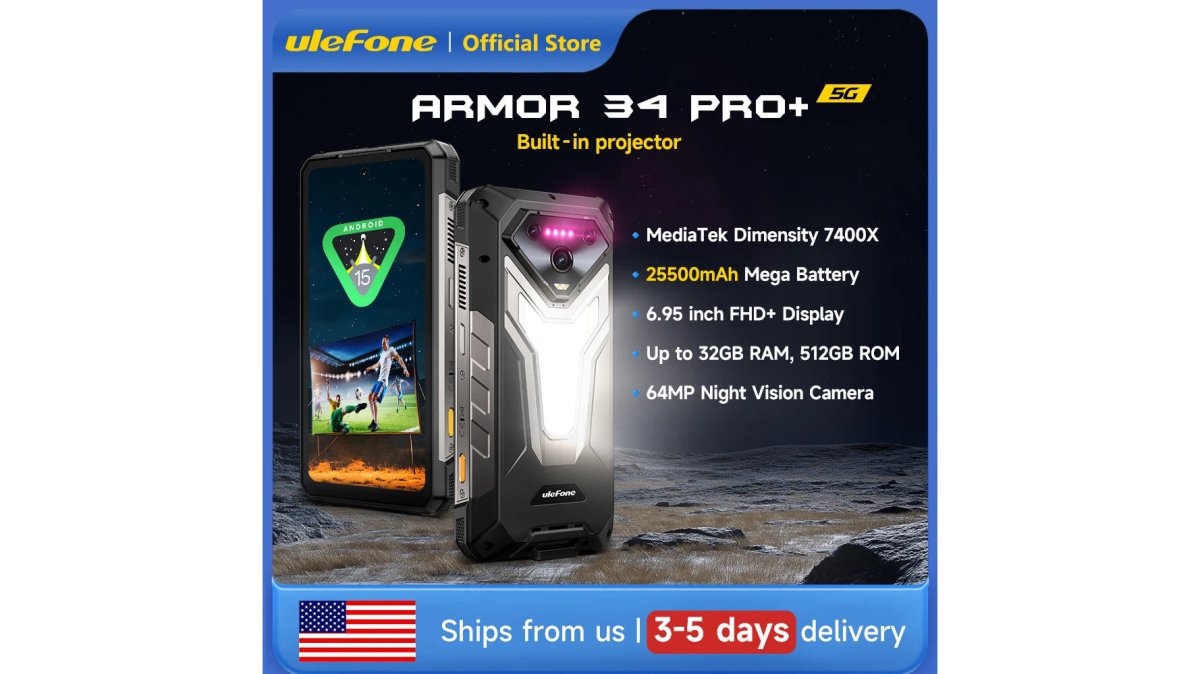
| Ulefone Armor 34 Pro Plus | 25500mAh | Built-in projector, 66W charging | Location scouting, client presentations, power backup |
| 5-in-1 Magnetic Wireless Charging Stand | 3500mAh | 360° adjustable with ambient light | Desk-based charging, lightweight backup |
Best Power Bank for Photographers: Capacity, Speed, and Portability
The best power bank for photographers balances three competing needs: enough capacity to charge a camera battery multiple times, fast charging to minimize downtime, and portability so it doesn't become dead weight in your bag.

A 10000mAh portable power bank represents the sweet spot for most photographers shooting 4-8 hours on location. This capacity typically recharges a smartphone 2-3 times or a mirrorless camera battery once, depending on the device. For longer shoots, rugged phones with massive built-in batteries, like the Ulefone Armor 33 Pro's 25500mAh capacity, function as extended power stations that fit in your pocket.

The Perfect Take Gear 10000mAh Magnetic Wireless Power Bank delivers 22.5W dual-mode charging, meaning it powers phones wirelessly or via USB-C cable at the same speed. The compact 98 x 64 x 15mm form factor fits a jacket pocket without bulk. An LED display shows remaining power at a glance, critical when you're on set and can't afford surprises.
For photographers who shoot all day in remote locations, the Ulefone Armor 33 Pro flips the equation. Instead of carrying a separate power bank, your phone becomes the power source. Its 25500mAh battery delivers roughly 10 days of standby power and supports 66W fast charging.
Best Power Bank for Camera: USB-C Power Delivery and Fast Charging
USB-C Power Delivery (USB-C PD) is the standard that matters for modern camera power banks. It allows bidirectional charging, your power bank can charge your devices AND be recharged by the same cable, and supports higher wattages than older USB standards.
The best power bank for camera charging includes at least 18W USB-C PD output. This powers most mirrorless cameras and cinema cameras during active use, not just during idle charging. Many professional cameras now support USB-C charging natively, making this the single most important specification when choosing backup power.
The Perfect Take Gear 10000mAh Magnetic Wireless Power Bank outputs up to 22.5W via USB-C, above the camera charging threshold. It charges three devices simultaneously, so you can power a camera, phone, and wireless microphone from one unit. The multiple safety protections (over-voltage, over-current, over-temperature, short-circuit protection) ensure your expensive camera gear stays safe during extended outdoor shoots.
For videographers who need camera power plus phone backup, the Ulefone Armor 34 Pro Plus adds an unexpected advantage: a built-in 150-lumen projector. During location scouting or client reviews, you can project footage directly from the phone onto a surface up to 100 inches wide. The 25500mAh battery with 66W fast charging keeps your actual camera powered while the phone serves as both monitor and backup power source.

Power Bank Capacity for a Full-Day Shoot: Calculating Your Needs
Capacity alone doesn't determine runtime. A 10000mAh power bank doesn't deliver 10000mAh of usable power to your devices, conversion losses and the power bank's own overhead consume 15-25% of that capacity.
To calculate actual power needs, start with your device battery capacities in watt-hours (Wh), not mAh. A typical mirrorless camera battery runs 50-80Wh. A smartphone battery is 10-20Wh. Wireless lighting or a drone might draw 30-50Wh per charge.
For a full-day shoot, identify your minimum power requirement. A photographer shooting 8 hours with one camera, one phone, and one wireless microphone might need:
- Camera battery: 1 full recharge (60Wh)
- Phone battery: 2 full recharges (40Wh)
- Wireless mic: 1 recharge (15Wh)
- Total: 115Wh minimum
A 10000mAh power bank at 3.7V nominal voltage stores roughly 37Wh. You'd need three of them to hit 115Wh, realistic for a half-day shoot with multiple devices.
For full-day shoots in remote locations where recharging isn't possible, a rugged phone with 25500mAh capacity becomes practical. The Ulefone Armor 30 Pro packs 12800mAh (roughly 47Wh) with 66W fast charging and 10W reverse charging, meaning it can power external devices while charging itself. At $509.99, it bridges the gap between a phone and a dedicated power station.
Portable Power Station for Photography: Rugged Phones as Extended Backup
A portable power station traditionally means a large box with AC outlets, solar panels, and enough capacity to power a full production crew. For location photographers, that's overkill. A rugged phone with massive battery capacity functions as a practical portable power station without the weight penalty.
The Ulefone Armor 33 Pro at 25500mAh capacity and 776.5g weight delivers the power density of a dedicated power station in phone form. Its 10W reverse charging lets it power external USB devices, cameras, lights, drones, while the phone itself stays charged. The dual-screen design means you review footage on the rear 3.4-inch display while keeping the main 6.95-inch screen free for navigation or client communication.
IP68/IP69K/MIL-STD-810H certification ensures the phone survives dust, water, and drops that would destroy typical gear. The 64MP infrared night vision camera doubles as a thermal imaging tool for location scouting. An 118dB loudspeaker provides on-set audio monitoring without external speakers.
10000mAh Magnetic Wireless Power Bank - 22.5W →
The Ulefone Armor 34 Pro Plus adds a 150-lumen DLP projector. During production, you project footage directly onto a surface for client review without carrying a separate monitor or projector. The 1100-lumen rear LED light serves as both a work light and emergency beacon. At $870.99, it consolidates phone, power station, monitor, and light into one device, valuable for solo operators or small crews.
Recharging and Runtime During Production Days
Runtime depends on how much current your devices draw. A camera in standby mode uses minimal power. Active shooting, especially with image stabilization, autofocus, and video, draws 2-5 amps. Wireless lighting or audio equipment can draw 1-3 amps each.
A 10000mAh power bank with 22.5W output can sustain about 4.5 amps of current draw, enough for a camera plus a phone, but not a camera plus lights plus a drone simultaneously. If you're powering multiple high-draw devices, you need either multiple power banks or a larger capacity solution.
Recharging during the production day matters more than total capacity. A portable power bank with 22.5W USB-C PD recharges fully in 1-2 hours from a wall outlet or fast charger. If you're shooting in a location with grid power access (a studio, an office building, a vehicle with 12V power), you can rotate power banks: use one while the other charges.
For remote locations without grid power, rugged phones become your only option. The Ulefone Armor 33 Pro's 66W fast charging restores the battery from 0-50% in roughly 30 minutes, realistic if you have a portable solar panel or a vehicle charger. The 10W reverse charging means you can top off your camera or phone from the rugged phone's battery without waiting for external power.
How to Choose: Portability, Weight, and On-Set Usability
The portable power bank that works best depends on your specific shoot profile. A studio-based product photographer has different needs than a documentary crew on a week-long remote assignment.
For compact shoots under 6 hours with one camera and one phone, the Perfect Take Gear 10000mAh Magnetic Wireless Power Bank ($33.99) hits the right balance. Its 98 x 64 x 15mm size fits a jacket pocket.
For all-day shoots where you're moving between locations, the Ulefone Armor 30 Pro ($509.99) consolidates your phone and backup power into one device.
For multi-day shoots in remote locations, the Ulefone Armor 33 Pro ($607.99) or Armor 34 Pro Plus ($870.99) become practical. The 25500mAh capacity provides genuine all-day power without recharging.
Weight and portability matter more than capacity once you exceed 10000mAh. A 25500mAh power bank is roughly the size of a water bottle and weighs 800+ grams, impractical for handheld work.
On-set usability means considering noise, heat, and interference. Traditional power stations are bulky and generate heat. Rugged phones operate silently and generate minimal heat. They don't interfere with wireless audio or video equipment.
Conclusion
Portable power banks for on-location shoots aren't luxury items, they're insurance against lost shots and broken workflows. The right choice depends on shoot duration, device count, and whether you're operating solo or with a crew.
For photographers and videographers building a power strategy, Perfect Take Gear offers solutions across the spectrum. The 10000mAh Magnetic Wireless Power Bank provides compact, fast-charging backup for short shoots. The rugged Ulefone phones consolidate phone, power, and resilience into single devices rated for professional use.
Start with a compact 10000mAh power bank for everyday shoots. Add a rugged phone with 12800mAh or larger capacity for full-day remote production. This layered approach covers 95% of on-location power needs without overspending on capacity you won't use. Visit Perfect Take Gear's Content Creator Gear & Equipment section to explore portable power solutions designed for creators.
Frequently Asked Questions
How many watt-hours do I need for a power bank on a full-day shoot?
Most mirrorless cameras need 15-25 watt-hours per full battery cycle. For an 8-hour shoot with two camera batteries, plan 30-50 watt-hours minimum. The 10000mAh Magnetic Wireless Power Bank delivers roughly 37 watt-hours (10000mAh × 3.7V nominal), enough for one full recharge of most phones and one camera battery. For longer shoots or multiple devices, rugged phones like the Ulefone Armor 33 Pro (25500mAh, roughly 94 watt-hours) provide all-day backup.
What ports should a power bank have for on-location filming?
USB-C Power Delivery is essential for fast charging modern cameras and phones. The 10000mAh Magnetic Wireless Power Bank includes USB-C with up to 22.5W output, recharging most phones in 1-2 hours. Dual ports (USB-C and USB-A) let you charge two devices simultaneously, critical when your main camera and backup phone both need power mid-shoot. Wireless charging adds flexibility for quick top-ups without cables cluttering your kit.
Can I use a rugged phone as a backup power source for my camera during filming?
Yes, rugged phones with reverse charging act as portable power stations for photography. The Ulefone Armor 33 Pro and Armor 34 Pro Plus both feature 10W reverse charging, allowing you to power external devices. Their massive batteries (25500mAh) mean they can charge your main phone, camera batteries, and lighting gear throughout a full production day. They're heavier than compact power banks but provide substantially more total capacity for all-day shoots.
What's the difference between a portable power bank and a power station for on-location work?
Compact power banks like the 10000mAh Magnetic Wireless model prioritize portability and fit in your pocket, ideal for quick recharges between camera batteries. Portable power stations (or rugged phones with large batteries) offer 3-5x more capacity but weigh more and take up pack space. For a full-day shoot, the 10000mAh handles emergency top-ups; for extended production with multiple cameras, lighting, and drones, a rugged phone's 25500mAh capacity ensures you'll never run out of backup power.