

How Long Do Professional Streaming Microphones Last?
Table of Contents
- How Long Do Streaming Microphones Last? The Short Answer
- Dynamic vs Condenser Microphone Durability: What Changes
- Signs of a Failing Microphone and When to Repair
- How to Store Studio Microphones to Extend Their Life
- Frequently Asked Questions
Last Updated: September 6, 2026
How Long Do Streaming Microphones Last? The Short Answer
Professional streaming microphones typically last between 10 and 20 years with proper care, depending on the microphone type, the environment, and whether you treat drops and voltage spikes as threats (edu).
A microphone is a transducer that converts acoustic energy into electrical signals through physical movement, so mechanical wear is inevitable. However, most modern microphones fail from environmental stress and mishandling, not use.
Dynamic vs Condenser Microphone Durability: What Changes
Dynamic microphones generally outlast condensers because their design is mechanically simpler. Condensers rely on a thin, gold-sputtered diaphragm microns from a backplate, making them more sensitive to humidity, dust, and shock (aes.org).
The durability gap narrows with modern build quality and intended use. A high-quality condenser in a controlled studio can outlive a dynamic that is regularly dropped or exposed to smoke.
Signs of a Failing Microphone and When to Repair
Common signs of failure include a gradual loss of high-frequency response, increased self-noise, intermittent crackling, and a drop in output level. A dull top end points to diaphragm fatigue or contamination; crackling that worsens when you move the cable points to a wiring issue, which is often repairable.
Separate the capsule from the electronics: if it sounds dull but consistent, the capsule is degrading; if it cuts out or crackles, suspect the cable, solder joints, or USB interface. Many shops can replace a USB connector or reflow a solder joint for a fraction of a new microphone's cost.
| Symptom | Likely Cause | Repair or Replace |
|---|---|---|
| Dull high end, reduced clarity | Capsule contamination or diaphragm fatigue | Replace capsule if cost-effective |
| Intermittent crackling, cuts out | Faulty cable, worn USB port, cold solder joint | Repair (often inexpensive) |
| Sudden silence, no signal | Failed preamp circuitry or ADC | Replace, unless under warranty |
| Hissing or elevated self-noise | Aging components, humidity damage | Replace if cleaning does not help |
| Distortion at normal levels | Phantom power damage or voltage spike | Replace, circuitry likely compromised |
| Physical rattling when moved | Loose internal components | Repair if under warranty |
A repair-first approach makes sense for the first two scenarios. For the latter three, diagnosis and component-level repair often exceed the price of a new microphone, especially for USB models with integrated ADC and preamp. If you are weighing whether to repair or upgrade, browsing Content Creator Gear & Equipment can help you compare replacement options against the cost of a fix.
How to Store Studio Microphones to Extend Their Life
Proper storage is the most effective way to extend a microphone's life. The enemies are humidity, dust, and temperature swings. Moisture can permanently ruin a condenser capsule; dynamics are more tolerant but still suffer from connector corrosion.
Use a dedicated storage case with a desiccant pack (dpreview.com). Remove the XLR cable when not in use, keep the microphone upright or in its shock mount, and maintain a consistent room temperature between 60 and 75 degrees Fahrenheit.
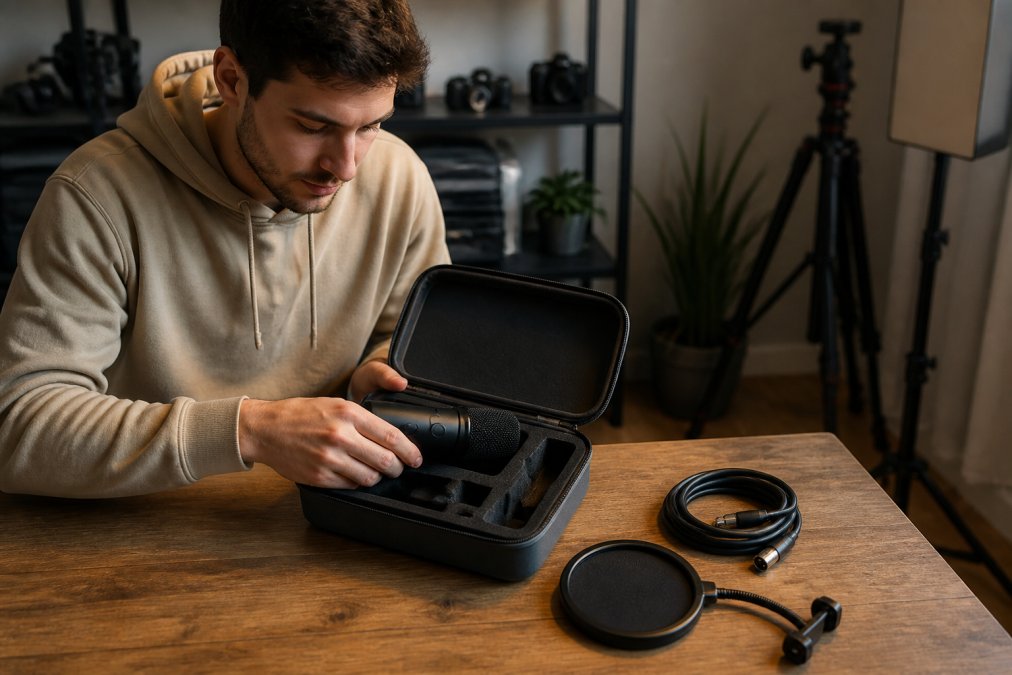
A simple hygrometer tells you when conditions approach the danger zone. In humid climates, a small dehumidifier or silica gel packs prevent gradual corrosion. A quality USB interface or mixer with surge protection buffers against phantom power and voltage spikes. For streamers building out a resilient setup, Cameras, Lighting & Audio Equipment covers the supporting gear that protects your microphone investment.
Wipe down the exterior after each session, inspect cables monthly for bent pins or frayed shielding, test frequency response against a reference recording every six months, and clean the pop filter regularly.
A faulty interface can send unstable phantom power that stresses the internal regulator. A dedicated power conditioner, not just a surge protector, smooths voltage fluctuations that degrade capacitor health.
With proper storage discipline, a quality dynamic can serve a streamer for a decade or more, and a well-maintained condenser can last even longer. Gear that fails early is almost always stored poorly, handled roughly, or connected to unstable power. Perfect Take Gear offers USB condenser microphones and dynamic options with dual USB and XLR connectivity, designed for creators who want reliable performance.

Frequently Asked Questions
Do microphones deteriorate over time even if they are not used?
Yes, but the deterioration is usually slow. The primary culprits are environmental: humidity can corrode the metal parts and solder joints inside the capsule, and dust can clog the diaphragm. Storing your microphone in a case with a desiccant pack and in a climate-controlled room will prevent most of this age-related wear. A well-cared-for microphone can outlast several computers and interfaces.
Are dynamic microphones more durable than condenser microphones?
Generally, yes. Dynamic microphones have a simpler transducer design that is more resistant to humidity and physical shock. Condenser microphones have a delicate diaphragm and require phantom power, making them more sensitive to moisture and voltage spikes. For a high-traffic streaming setup where mics get bumped, a dynamic model is often the safer, longer-lasting choice.
How often should you replace your streaming microphone?
There is no set schedule; you replace it when it fails to perform. Most professional streaming microphones last 10 to 20 years with proper care. However, you might choose to upgrade sooner if you notice a degradation in sound quality, such as a dull frequency response or increased self-noise, that cleaning and maintenance cannot fix.
Choosing a microphone is only half the battle; protecting that investment determines how long it serves your channel. Perfect Take Gear offers creator-focused audio gear, from plug-and-play USB condenser microphones with RGB lighting to full-metal dynamic microphones with dual USB and XLR connectivity, all built for the realities of daily streaming. Get started with Perfect Take Gear and build a studio setup that lasts as long as your content ambitions.