

Durable Camera Stands for Creators: 2026 Review
Table of Contents
- What Makes a Durable Camera Stand for Creators
- Heavy Duty Tripod for Video: Key Specifications
- Best Overhead Camera Mount for Desk Setup
- Camera Stand Weight Capacity Guide
- Top Durable Camera Stands Reviewed
- Tripod Maintenance Tips for Long-Term Durability
- Which Stand Fits Your Creator Setup
- Conclusion
Last Updated: August 11, 2026
What Makes a Durable Camera Stand for Creators
A durable camera stand eliminates camera shake, enables hands-free operation, and lets you focus on content instead of fighting unstable equipment. What separates durable stands from disposable ones is how they handle real-world stress after 200 shooting days, not just on day one.
At Perfect Take Gear, we've tested dozens of stands across different creator workflows: solo vlogging, desk-based content, overhead shots, and multi-camera setups. The stands that last are engineered for quick setup, reliable performance under repeated use, and the ability to support increasingly heavy camera systems as you upgrade. A wobbly tripod creates micro-vibrations that show up in video as jitter, while a stand with poor load capacity forces you to downgrade your camera, constraining creative choices.
Heavy Duty Tripod for Video: Key Specifications
When shopping for a heavy duty tripod for video, you're evaluating whether the stand will deliver smooth, stable footage day after day and handle the specific camera systems you own now and plan to own later.
Load Capacity and Stability
Load capacity is the maximum weight a stand can safely support without tipping, sagging, or introducing vibration. Optimal performance typically happens at 60-70% of rated capacity. A stand rated for 20 pounds performs best around 12-14 pounds.
Stability depends on more than weight alone. A heavier, more rigid stand with a lower center of gravity outperforms a taller stand with the same rated capacity. Leg angle affects stability: wider leg spreads provide better support for off-center loads, common when mounting monitors or lights alongside your camera. Professional stands include ballast hooks for adding weight (sandbags) to increase stability in challenging conditions.
Material Construction: Aluminum vs. Carbon Fiber
Aluminum tripods are heavier but more affordable and durable in high-use environments. They handle repeated assembly and disassembly without fatigue and absorb vibration naturally, reducing micro-vibrations in video.
Carbon fiber tripods weigh 30-40% less than aluminum, which matters if you carry your stand between locations regularly. The downside: carbon fiber is more brittle and costs 50-100% more. For solo creators shooting in a fixed location, aluminum offers better value. For travelers, carbon fiber's weight savings justify the premium.
Best Overhead Camera Mount for Desk Setup
Overhead shots are essential for product unboxing, crafting tutorials, cooking demonstrations, and desk-based content. A best overhead camera mount for desk setup needs to be stable enough to stay level during video, compact enough to fit typical workspace, and quick to position without constant adjustment.
Overhead mounts typically use a horizontal arm or boom extending from a vertical column, allowing the camera to position directly above your work surface. The arm should extend at least 24-36 inches horizontally to clear your work surface, with the camera at 36-48 inches above the desk for typical overhead framing.
Quick-release plates are essential for overhead work. Ball heads offer 360-degree positioning flexibility, while pan-tilt heads give more precise control over horizontal and vertical angles separately. Weight distribution matters more for overhead setups than standard tripods. An unbalanced load pulls the arm downward, requiring constant micro-adjustments to keep framing level. Counterweight systems or properly positioned quick-release plates help distribute weight evenly along the arm.
Camera Stand Weight Capacity Guide
Understanding weight capacity requires looking beyond the specification sheet. Real-world performance depends on how you're using the stand and what you're mounting on it.
Matching Your Camera and Lens to Load Limits
Your total payload includes the camera body, lens, monitor, microphone, and any other accessory mounted to the stand. A mirrorless camera body might weigh 1.3 pounds, a standard lens 1.8 pounds, and an external monitor 1.2 pounds, totaling 4.3 pounds before adding lights or audio gear.
Match your full rig weight to the stand's optimal performance range, not its maximum rating. A stand rated for 20 pounds performs smoothly at 12-14 pounds. At 18-20 pounds, you'll notice increased vibration and slower pan/tilt response. Lens weight varies dramatically: a compact prime lens weighs 8-12 ounces, while a professional zoom lens weighs 2-3 pounds. When upgrading your camera system, factor in the weight of lenses you plan to use.
Payload vs. Real-World Performance
Real-world performance diverges from specifications in several ways. A stand's rated capacity assumes level ground, centered loading, and no wind or vibration from nearby movement. Video creators should operate well below maximum capacity. A stand rated for 20 pounds should carry no more than 10-12 pounds for video work. Wind and external vibration also affect real-world performance.
Repeated mounting and dismounting degrades performance over time. Leg locks loosen slightly with use. A stand that felt perfectly stable on day one might develop subtle play after 100 mounting cycles. Quality construction minimizes this degradation.
Top Durable Camera Stands Reviewed
The stands reviewed here represent different approaches to creator needs: compact travel solutions, professional studio workhorses, budget-friendly options, and flexible systems designed specifically for content creation.
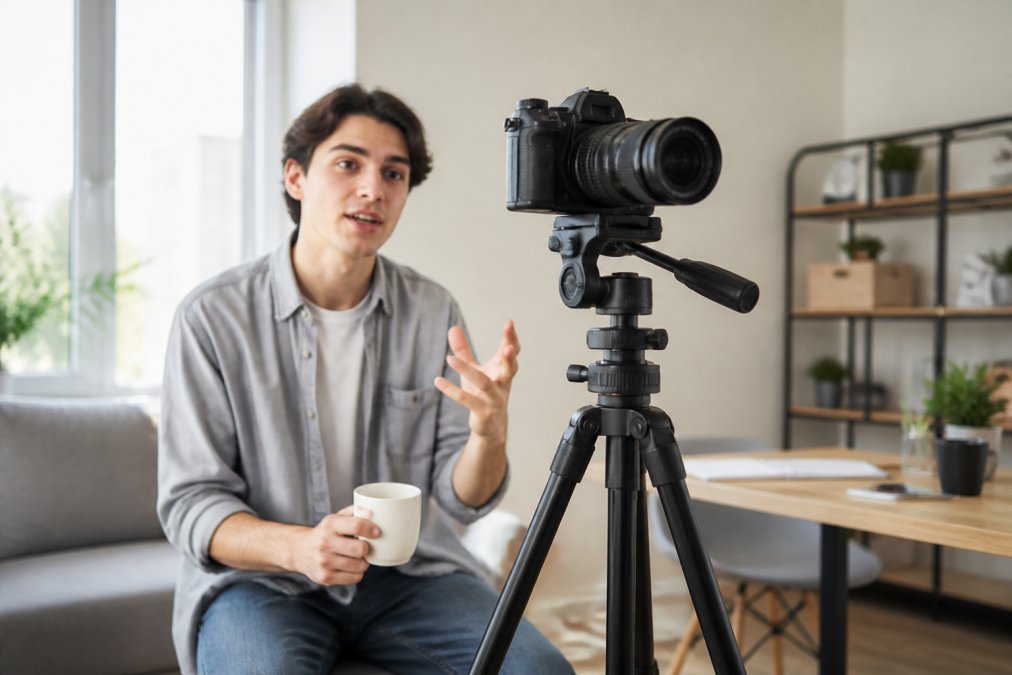
Peak Design Travel Tripod: Compact Durability
Peak Design's Travel Tripod prioritizes portability without sacrificing stability. It packs down to the diameter of a water bottle and weighs just 1.6 pounds in carbon fiber, ideal for creators who move between locations regularly. The integrated ball head with a single adjustment ring simplifies setup, and the Arca-Swiss compatible quick-release plate is a professional standard.
Load capacity reaches 10 pounds, accommodating mirrorless cameras with standard lenses but limiting heavier telephoto lenses or multiple accessories. Peak Design backs the Travel Tripod with a lifetime guarantee, signaling confidence in durability.
Pros:
- Exceptionally compact and lightweight
- Reliable ball head integrated into the design
- Professional quick-release compatibility
- Lifetime warranty
Cons:
- Carbon fiber model is expensive
- Ball head limits smooth video panning
- Lower maximum height and load capacity
Manfrotto 055 Carbon Fiber: Versatile Professional Build
Manfrotto's 055 series is a workhorse in professional studios and on location shoots. The carbon fiber construction delivers rigidity and vibration damping, while the 90-degree center column mechanism allows you to position the camera directly above the tripod base for overhead shots or extend it horizontally for low-angle work.
Quick Power Lock (QPL) leg mechanisms secure each leg segment with a quarter-turn, speeding up setup. Load capacity reaches 26.5 pounds, accommodating professional camera systems with heavy lenses and accessories. The 055 weighs around 4.6 pounds, lighter than comparable aluminum models.
Pros:
- Exceptional stability and rigidity
- Unique 90-degree center column for creative angles
- Quick setup with QPL leg locks
- High load capacity
Cons:
- Heavier than travel-focused alternatives
- Manfrotto RC2 plate requires adapters for Arca-Swiss compatibility
- Higher price point
SmallRig Heavy-Duty Fluid Head: Creator-Friendly Value
SmallRig's Heavy-Duty Fluid Head Tripod (AD-01) targets creators on a budget who need smooth video panning without professional-grade prices. The fluid head delivers smooth 360-degree movements, essential for video work where jerky camera movements distract viewers.
The aluminum construction keeps weight manageable while maintaining adequate rigidity. Load capacity reaches 17.6 pounds, handling most mirrorless and DSLR setups with standard lenses. The real value proposition is the fluid head at this price point. The tradeoff is payload: at 17.6 pounds maximum, you're limited to lighter camera systems.
Pros:
- Excellent value for a fluid head tripod system
- Smooth video panning and tilting
- Dual quick-release compatibility
- Lightweight and portable
Cons:
- Maximum payload of 17.6 pounds limits heavier setups
- Aluminum construction is heavier than carbon fiber
- Not suitable for very heavy camera and lens combinations
JOBY GorillaPod 5K: Flexible and Adaptable
JOBY's GorillaPod 5K features flexible, wrappable limbs that bend and grip around objects, tree branches, fence posts, or door frames. You can wrap the GorillaPod around a tree branch for overhead shots, grip it to a desk edge for a unique angle, or position it on uneven terrain where traditional tripods would be unstable.
The ball head with Arca-Swiss quick release is professional-grade, and the 11-pound load capacity accommodates mirrorless and DSLR systems with standard lenses. The tradeoff is maximum height: the GorillaPod reaches about 12-16 inches tall when fully extended, working for desk-mounted shots or low-angle work but not providing the elevation of traditional tripods.
Pros:
- Incredibly versatile for unconventional mounting positions
- Compact and lightweight for travel
- Strong enough for professional cameras
- Arca-Swiss compatible quick release
Cons:
- Limited height compared to traditional tripods
- Ball head is adequate but not as smooth as dedicated video heads
- Not ideal for situations requiring perfect stability
Moman Max80: Budget-Friendly Full Height
Moman's Max80 delivers impressive height at an entry-level price. It extends to 79 inches, matching many professional tripods, while costing a fraction of the price. The aluminum alloy construction is sturdy, and five-section legs with twist-lock mechanisms allow quick setup.
Load capacity is adequate for lighter camera systems, around 33 pounds (15kg). The aluminum construction introduces more vibration than carbon fiber alternatives, which matters for video work. At maximum height with a full load, you'll notice some flex in the legs.
The real strength is value for creators on tight budgets. Durability is acceptable for moderate use, though twist-lock mechanisms loosen gradually with repeated assembly and disassembly.
Pros:
- Impressive maximum height at budget pricing
- Lightweight and portable for its height
- Versatile leg angles and reversible center column
- Good stability for stationary shots
Cons:
- Aluminum construction introduces more vibration than carbon fiber
- Twist-lock mechanisms loosen with repeated use
- Not ideal for video panning
- Lower maximum load capacity
Tripod Maintenance Tips for Long-Term Durability
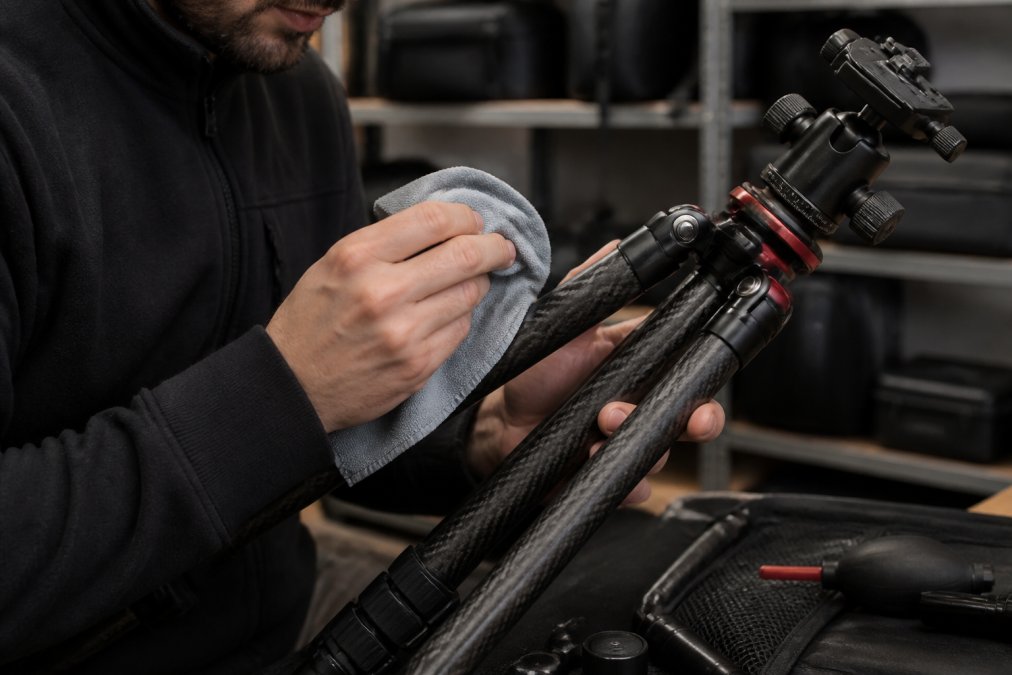
A durable camera stand requires active maintenance. Regular cleaning prevents most problems. After shooting in dusty, sandy, or wet environments, wipe down the legs with a soft cloth. Sand and grit in leg-lock mechanisms cause grinding that accelerates wear.
Leg locks require periodic attention. Twist-lock mechanisms loosen gradually with use. Every 50-100 uses, inspect leg locks for play. If you notice looseness, apply a small amount of threadlocker (like Loctite) to the internal threads, then tighten and allow to cure.
Quick-release plates accumulate dust and residue that interferes with the locking mechanism. Clean the plate and the mating surface on the camera body monthly with a dry cloth. Never use lubricants on quick-release mechanisms; they attract dust and degrade performance.
Center columns and ball heads benefit from light lubrication. If panning becomes stiff, apply a tiny amount of silicone lubricant to the ball socket. For center columns, a small amount of silicone spray reduces friction and improves smoothness.
Inspect the center column for damage or dents. A dented column introduces play that affects stability. Store tripods in a cool, dry location. Extreme temperature changes cause material expansion and contraction that loosen connections. Check quick-release plate security regularly. A loose plate that shifts during shooting ruins video framing and risks dropping your camera.
Which Stand Fits Your Creator Setup
Choosing the right stand depends on your specific workflow, not just general specifications.
For solo creators shooting in a fixed location: The Manfrotto 055 Carbon Fiber or SmallRig Heavy-Duty Fluid Head deliver the best combination of stability, versatility, and video-focused features. The horizontal center column on the 055 enables overhead shots without additional equipment.
For creators who move between multiple locations regularly: The Peak Design Travel Tripod wins on portability without sacrificing stability.
For content creators on a budget: The Moman Max80 provides maximum value, offering impressive height and stability for stationary work.
For creators needing creative angles and unconventional positioning: The JOBY GorillaPod 5K solves problems traditional tripods can't. If your content involves wrapping around objects or shooting from unusual angles, the flexibility justifies the lower height.
For professional video work with heavy camera systems: Consider premium stands like the Gitzo GT2542 for the rigidity and load capacity for demanding setups.
Consider your upgrade path when choosing a stand. If you plan to move from a mirrorless camera to a heavier DSLR with telephoto lenses, buy a stand with load capacity headroom. A stand rated for 20 pounds that you're currently using at 10 pounds will feel unstable when you approach its limits later.
Frequently Asked Questions
What is the best durable camera stand for content creators?
The best durable camera stand depends on your setup and budget. For video creators needing smooth pans, the SmallRig Heavy-Duty Fluid Head Tripod offers excellent value with a fluid head and 17.6 lbs load capacity. For portability, the Peak Design Travel Tripod in carbon fiber provides exceptional stability in a compact form. For studio work, the Manfrotto 055 with its 90-degree center column enables overhead shots and creative angles. Evaluate your camera weight, desired height, and whether you prioritize travel or stationary use.
How do I choose the right camera stand weight capacity for my equipment?
Calculate your total payload by adding your camera body, lens, microphone, and any other mounted accessories. Most creators shooting mirrorless or DSLR setups need 8-15 lbs capacity. As a rule, select a stand rated for at least 1.5 times your total weight to ensure stability and reduce vibration. For example, if your camera rig weighs 10 lbs, choose a stand with at least 15 lbs capacity. This buffer prevents the stand from working at maximum capacity, which accelerates wear on locking mechanisms.
Are carbon fiber tripods more durable than aluminum for long-term use?
Carbon fiber tripods offer superior vibration dampening and are lighter for their strength, making them ideal for creators who travel frequently or need extended shooting sessions. Aluminum alloy stands are heavier but still durable and often more affordable. Both materials last years with proper maintenance. Carbon fiber resists corrosion better in humid environments, while aluminum requires occasional cleaning. Choose carbon fiber if portability and vibration reduction matter; aluminum works well for stationary studio setups on a budget.
What tripod maintenance tips extend the life of my camera stand?
Clean your tripod legs and joints monthly with a soft, dry cloth to prevent dust buildup in locking mechanisms. Check quick-release plates and twist locks for tightness before each shoot. Store your stand in a dry location away from extreme temperature changes, which can affect material integrity. Inspect the center column for smooth operation and apply a light silicone lubricant to sticky joints. Avoid dropping or applying excessive force when extending legs. With these habits, a quality stand lasts 5-10 years or longer.
Choosing a durable camera stand for creators means balancing portability, stability, and load capacity against your actual workflow. Perfect Take Gear curates equipment that creators trust for consistent, professional results. Whether you're starting with a budget-friendly option or investing in professional-grade stability, the right stand becomes invisible in your production process, you stop thinking about equipment and focus on creating.
This article was written using GrandRanker