

Best Wireless Microphone Systems for Interviews
Table of Contents
- Wireless Microphone Systems for Interviews: What You Need to Know
- Quick Comparison: Wireless Microphone Systems at a Glance
- ALLOET 2-in-1 Wireless Headset & Handheld Microphone: Flexibility for Teaching and Presentations
- SYNCO Lav-S6E Wired Lavalier Microphone: Best Microphone for Street Interviews and On-the-Go Recording
- Wireless Microphone Buying Guide: How to Choose the Right System
- Dual Wireless Microphone System for Interviews: When and How to Use Two Mics
- Wireless Microphone for Camera and Phone: Compatibility and Setup
- Frequently Asked Questions
Last Updated: October 8, 2026
Wireless Microphone Systems for Interviews: What You Need to Know
Wireless microphone systems for interviews eliminate cable clutter and let speakers move naturally. Whether you're recording street interviews, one-on-one conversations, or content, the right setup transforms speech clarity and broadcast-quality audio.
Perfect Take Gear carries wireless microphone systems for creators who need reliable, hands-free recording. This guide covers the key types of wireless microphone systems for interviews, how to choose between them, and which setups suit different formats.
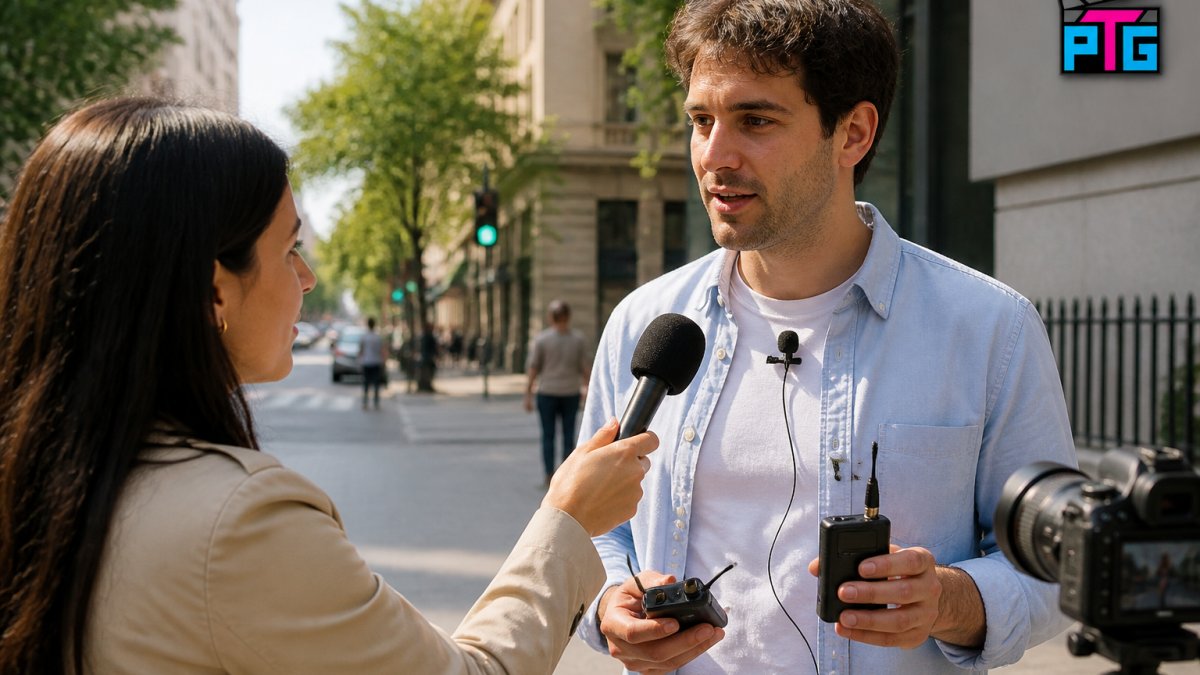
Choosing between wireless lavalier systems, handheld wireless microphones, and dual-microphone setups depends on your interview style, venue size, and mobility needs. Below, we'll show you how to evaluate wireless microphone systems for interviews and match them to your workflow.
Quick Comparison: Wireless Microphone Systems at a Glance
| Microphone Type | Best For | Key Advantage | Price Range |
|---|---|---|---|
| Wireless Lavalier (Wired) | Street interviews, hands-free recording | Long cable reach, no batteries | $46.99 |
| Wireless Headset & Handheld | Teaching, presentations, flexibility | 2-in-1 design, interference-free | $36.99 |
| Dual Wireless System | Multi-person interviews | Capture two speakers simultaneously | Varies |
| Handheld Wireless | Reporter-style interviews | Professional appearance, speaker control | Varies |
ALLOET 2-in-1 Wireless Headset & Handheld Microphone: Flexibility for Teaching and Presentations
The ALLOET 2-in-1 Wireless Headset & Handheld Microphone combines two recording styles in one wireless microphone system for interviews at $36.99. Its detachable headband switches between hands-free and handheld use without swapping equipment.

It uses 2.4G wireless connectivity with automatic pairing on power-up, so no frequency adjustments are needed even with multiple units. The auto power-off kicks in after 45 minutes of inactivity, conserving battery for longer shoots.
The transmitter and receiver are compact black ABS units. Included accessories cover most setups: transmitter, receiver, adapter, and charging cable. This wireless microphone system for interviews suits teaching, fitness instruction, stage presentations, and any situation where you move freely without cable management.
SYNCO Lav-S6E Wired Lavalier Microphone: Best Microphone for Street Interviews and On-the-Go Recording
The SYNCO Lav-S6E Wired Lavalier Microphone ($46.99) combines a 6-meter cable with omnidirectional capture. The extended reach lets you position the receiver away from the subject, keeping equipment out of frame.

Its 360-degree condenser capsule captures natural detail from all directions, while low self-noise circuitry rolls off ambient noise below 70Hz, keeping traffic, wind, and chatter from overwhelming the speaker. An indicator light shows connection status before recording starts.
Its 3.5mm TRRS and TRS inputs work across iOS and Android phones, cameras, laptops, and PCs without an adapter. This wireless microphone system for interviews suits mobile creators who switch between platforms.
The 6-meter cable eliminates a separate wireless transmitter, cutting setup time and weight. For street interviews where you move quickly between locations, this wired lavalier keeps gear minimal and audio clean.
Wireless Microphone Buying Guide: How to Choose the Right System
Choosing the right wireless microphone system for interviews starts with three factors: interview format, venue size, and mobility needs. The differences come down to a handful of technical decisions most roundups gloss over. Here's how to evaluate them.
Interview Format: Street and one-on-one interviews benefit from lavaliers that clip to clothing. Reporter-style interviews work better with handheld wireless microphones. Teaching and fitness instruction demand hands-free systems. Two-person conversations need a dual-transmitter system or two matched singles on coordinated frequencies.
Wireless Band and Interference Behavior: Consumer wireless mic systems generally fall into different bands, and each behaves differently in an interview setting:
- 2.4 GHz digital (used by the ALLOET 2-in-1): License-free, auto-pairing, and compact. The trade-off is that 2.4 GHz shares spectrum with Wi-Fi, Bluetooth, and microwave ovens, so crowded venues can introduce dropouts. Most systems frequency-hop to mitigate this, but range shrinks in dense RF environments.
- UHF (470-608 MHz in the U.S.): The traditional choice for professional interviews. UHF penetrates walls better, offers more headroom for multiple simultaneous systems, and lets you manually select a clean channel. The trade-off is cost, larger transmitters, and the need to check for local TV broadcast conflicts in your area before a shoot.
- VHF: Rare in modern interview kits; longer wavelengths travel farther but the band is crowded and audio quality is typically narrower.
Venue and Signal Range: Indoor spaces with stable Wi-Fi and Bluetooth favor 2.4 GHz systems for short-range work. Outdoor interviews may face interference from competing devices. Test your wireless microphone system for interviews in the actual venue and walk the subject's full path.
Mobility and Cable Management: Wireless lavaliers eliminate cable clutter but require transmitter battery management. Wired lavaliers like the SYNCO Lav-S6E trade wireless flexibility for extended cable reach, ideal when keeping the receiver farther from the subject. Handheld wireless microphones give speakers control over placement but must be held throughout.
Transmitter and Receiver Form Factor: Bodypacks pair with lavaliers and hide under clothing; plug-ons turn any handheld into wireless; all-in-one systems like the ALLOET 2-in-1 combine transmitter and mic. Receivers come as camera-shoe units, belt clips, or USB-C/Lightning dongles. Match the receiver to your recording device, a camera-shoe receiver won't plug into a phone without an adapter.
Power and Battery Strategy: Most bodypack transmitters run on AA batteries or internal lithium-ion cells. AA offers field-swappable power; internal cells require planning around charge cycles. The ALLOET's 45-minute auto power-off saves battery but can interrupt long sit-down interviews. For full-day shoots, carry spare batteries or a USB power bank.
ALLOET 2-in-1 Wireless Headset & Handheld Microphone →
Backup Recording and Safety: Some transmitters include onboard recording as a safety net against dropouts. If your system does not, plan a second audio source, a phone recording app or a wired lavalier, so a single RF failure does not ruin the interview.
Dual Wireless Microphone System for Interviews: When and How to Use Two Mics
A dual wireless microphone system for interviews captures interviewer and subject simultaneously, eliminating mic swaps. It's essential for multi-person interviews, panels, and podcasts where both voices need equal quality.
Two Ways to Build a Dual Setup: Buy a purpose-built dual, one receiver, two transmitter channels, or run two matched singles side by side. Purpose-built duals simplify channel management and often share one receiver outputting stereo or mixed signal. Two singles give redundancy but require manual frequency coordination and two receivers.
Channel Coordination and Frequency Planning: In the 2.4 GHz band, most systems auto-pair and frequency-hop, so running two units from the same brand is usually plug-and-play. The ALLOET 2-in-1 system supports multiple units running at the same time without frequency conflicts, making it suitable for two-person interviews where each speaker gets their own headset or handheld mic.
Gain Staging for Two Voices: Set each transmitter's gain independently. Have each speaker talk at normal volume, watch the receiver's meter, and aim for peaks around −12 dBFS for headroom. If one speaker is louder, trim that channel at the transmitter rather than in post, fixing it at the source preserves dynamic range and avoids amplifying room noise.
Mic Placement for Consistent Levels: Position each mic at the same distance from the speaker's mouth. For lavaliers, that's roughly 6-8 inches below the chin, angled slightly upward, clipped to a stable layer of clothing. For handhelds, coach speakers to hold the mic 4-6 inches from their mouth. Test both before recording.
Monitoring and Mixing: If your receiver outputs two discrete channels, record them to separate tracks for post balancing. A single mixed signal loses that ability, check whether your recorder supports dual-channel input. Headphone monitoring catches a dead channel or rustling lav before the interview ends.
When a Dual System Is Overkill: Dual systems add complexity: more gear to charge, more signals to manage, more failure points. For a quick person-on-the-street interview needing only the subject's voice, a single lavalier or handheld is faster and less likely to fail.
Wireless Microphone for Camera and Phone: Compatibility and Setup
Most wireless microphone systems for interviews connect via 3.5mm jack (TRRS for phones, TRS for cameras). Confirm your device has the right input or needs an adapter, many modern phones drop the 3.5mm jack, requiring USB-C or Lightning.
The SYNCO Lav-S6E works directly with phones, cameras, laptops, and PCs through its standard 3.5mm connector. The ALLOET 2-in-1 system includes an adapter for flexibility across devices. Check your camera's audio input specifications to ensure the wireless microphone system for interviews outputs at the correct impedance.
Setup time varies: the ALLOET auto-pairs on power-up in under 30 seconds, while wired lavaliers like the SYNCO need only a cable connection. Test audio levels before recording, most devices let you monitor through headphones to confirm the wireless microphone system for interviews is capturing speech clearly.
Cable length matters for mobile interviews. A 6-meter cable gives flexibility to position your receiver away from the subject. Shorter cables keep everything compact but limit where you can stand while recording.
Choosing the right wireless microphone system for interviews depends on format, venue, and mobility. The ALLOET 2-in-1 delivers flexibility and affordability for teaching and presentations. The SYNCO Lav-S6E offers extended cable reach and direct compatibility with cameras and phones.

Perfect Take Gear stocks wireless microphone systems for interviews designed for creators at every stage. Whether you're starting your first content setup or upgrading your mobile recording kit, Content Creator Gear & Equipment includes the wireless microphone systems, lavalier microphones, and accessories you need to capture broadcast-quality audio. Consider the SYNCO Lav-S6E for hands-free recording, add the Alctron windscreen for outdoor interviews, and explore the ALLOET system for dual-microphone flexibility for multi-person conversations.
Frequently Asked Questions
What is the best wireless microphone system for interviews?
The right wireless microphone system depends on your interview format. For hands-free recording and teaching, the ALLOET 2-in-1 Wireless Headset & Handheld Microphone ($36.99) offers flexibility with its dual-mode design and long-range 2.4G transmission. For street interviews and on-the-go work, the SYNCO Lav-S6E Wired Lavalier Microphone ($46.99) provides a 6-meter cable reach, omnidirectional condenser capsule, and compatibility with phones, cameras, and laptops. Choose based on whether you need hands-free operation or maximum portability.
Is a lavalier or handheld microphone better for interviews?
Lavalier microphones are better for interviews where the subject moves freely or needs hands free, like street interviews, walking tours, or presentations. They clip to clothing and capture speech clearly without the subject holding a mic. Handheld microphones work better for sit-down interviews where the interviewer controls the mic and can position it for optimal audio. The ALLOET 2-in-1 system lets you switch between both styles, making it ideal if you do multiple interview formats.
How do I choose a wireless microphone system for a camera or phone?
Check the microphone's connectivity: the SYNCO Lav-S6E uses a 3.5mm TRRS/TRS jack, making it plug-and-play compatible with iOS and Android phones, DSLRs, mirrorless cameras, laptops, and PCs without adapters. The ALLOET 2-in-1 uses 2.4G wireless transmission, so confirm your camera or phone has a compatible receiver or adapter. Always verify the cable length (the SYNCO offers 6 meters) matches your interview setup, and test the audio quality before recording.
What accessories do I need for wireless microphone systems?
Windscreens are essential for outdoor interviews to reduce wind noise and pop sounds. The Alctron Microphone Foam Windscreen 5-Pack ($28.99) fits most handheld and wireless mics and protects the capsule from dust. For interviews in tight spaces or large venues, check your microphone's wireless range and cable length. If you're using a lavalier mic, you may also need a clip, gaffer tape, or a lav-mounting bracket to secure it safely to clothing.