

Best Background Ideas for YouTube Content Studios in 2026
Table of Contents
- What Makes a YouTube Studio Background Work
- DIY YouTube Studio Background Ideas That Look Professional
- How to Style a YouTube Studio Background for Your Niche
- RGB Lighting for Video Backgrounds: Setup and Techniques
- Acoustic Treatment and Small Space Optimization
- Backdrop Stands and Support Systems for Any Studio Layout
- Frequently Asked Questions
Last Updated: September 15, 2026
What Makes a YouTube Studio Background Work
The best background ideas for YouTube content studios share three traits: depth, controlled lighting, and visual interest that supports the subject instead of competing with it. According to YouTube's official creator resources, viewers decide whether to keep watching within the first few seconds, and a cluttered or flat background is one of the fastest ways to lose them. This guide from Perfect Take Gear breaks down proven backdrop setups for every budget, from fabric drapes to RGB lighting rigs.
A background works when it separates the creator from the wall behind them. Depth, lighting, and negative space do that work. Get those three right and almost any material looks professional.
Depth, Lighting, and Visual Interest
Depth of field is the distance between the sharpest part of the frame and the blurry background behind it. A shallow depth of field blurs the background into soft bokeh, keeping attention on the subject: a wide aperture like f/1.8 or f/2.8 produces it, while f/5.6 or higher keeps more of the room in focus.
Visual interest comes from texture, color, and objects that say something about the channel, a gaming setup, a bookshelf, or a framed print all add context. The mistake most creators make is filling every inch of the frame; negative space gives the eye somewhere to rest.
DIY YouTube Studio Background Ideas That Look Professional
DIY studio backgrounds work best when they solve a specific problem: hiding a plain wall, adding texture, or creating a clean color field for editing. Fabric and shelf setups cover most of those needs.
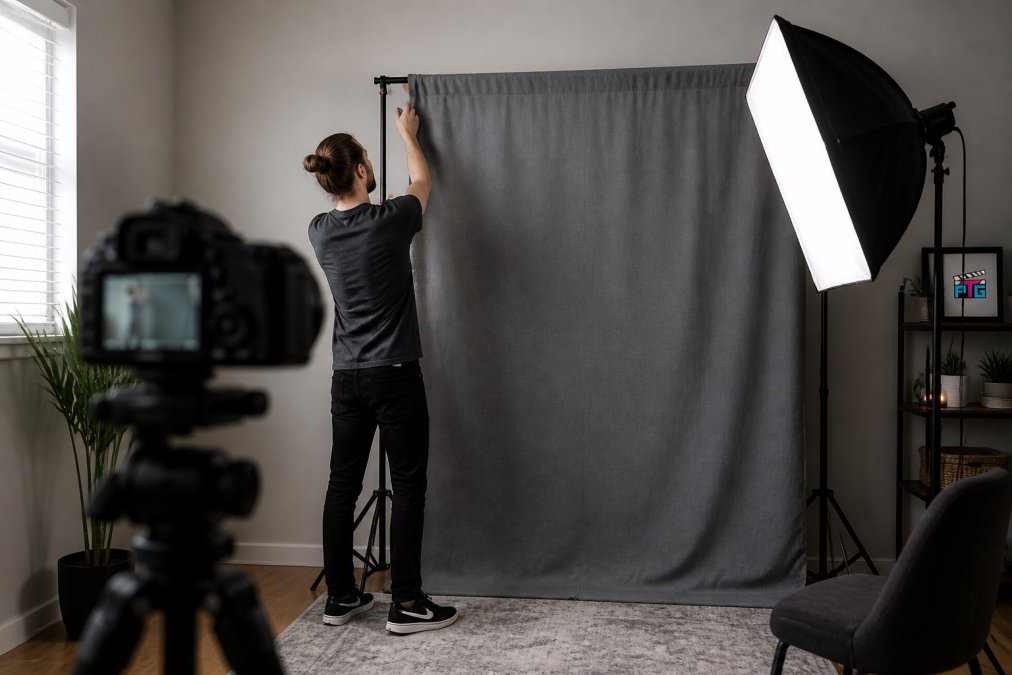
Fabric Backdrops and Curtain Setups
Fabric is the fastest way to transform a wall. A backdrop material like cotton canvas or polyester hangs flat, resists wrinkles, and absorbs light instead of bouncing it back.
- Cotton chromakey backdrops in green, white, or black give a smooth surface for keying or a clean neutral field
- Polyester curtain panels drape softly and work as room dividers between shoots
- Sequin or textured curtains add shimmer for lifestyle and event-style content
A common mistake is hanging fabric directly against a wall. Pull it a foot or two forward so light falls on it separately from the subject. That small gap creates the depth that makes a DIY setup read as professional.

Shelf Styling and Wall Decor
Shelves and wall decor do double duty: they add depth and tell viewers what the channel is about. The trick is restraint. Three to five objects per shelf, varied in height and shape, beat a packed display.
Group items by theme. A tech channel might mix a camera body, a vintage lens, and a small plant. A book channel leans on stacked spines and a framed print. Shelf styling works when it looks curated, not collected.
Framed art on the wall behind the subject adds color and texture without clutter. Hang pieces slightly off-center so the frame edges create diagonal lines in the composition.
How to Style a YouTube Studio Background for Your Niche
Styling a background for a niche means matching the color palette, props, and depth cues to what the audience expects, and to how the camera renders them. A finance channel and a gaming channel need different visual languages, even sharing the same backdrop stand. The angle most guides skip: your background is a system, not a single wall, and it has to survive thumbnail crops, mobile viewing, and the color shift between a 5600K key light and a warm practical lamp.

Color Palettes and Visual Branding
Visual branding starts with two or three colors repeated across your background, thumbnails, and lower thirds. Pick a dominant color, a secondary accent, and a neutral, then repeat them everywhere the viewer looks.
- Tech and gaming: deep blues, purples, and blacks with neon accents
- Lifestyle and wellness: warm neutrals, sage, and soft whites
- Education and business: navy, charcoal, and a single bright accent
- Beauty and fashion: blush, cream, and a metallic accent for bounce
Color-coordinated backgrounds make editing easier too: when the palette matches your graphics, cuts between B-roll and your main shot feel seamless instead of jarring.
Background Depth and Bokeh as a Styling Tool
Depth is the styling decision viewers feel but rarely name. A shallow depth of field turns a busy shelf into soft bokeh, keeping attention on the subject; f/5.6 or higher keeps more of the room readable. The trade-off: blur hides clutter but also hides the props that signal your niche, so decide whether the shelf is set dressing (keep it sharp) or texture (let it blur).
Focal length changes the look too: a 35mm lens on a crop-sensor camera shows more of the room, while an 85mm compresses the background and flatters faces. For most talking-head content, 35mm to 50mm is the sweet spot.
Modular Backdrops for Creators Who Change Sets
Most guides assume one permanent set, but creators pivot between formats, a tutorial one day, a product review the next, and rebuilding a wall each time kills momentum. A modular backdrop solves this with quick-change panels, magnetic frames, or a rolling stand you can swap in under a minute.
The practical pattern: keep one neutral base (a matte gray or charcoal wall or curtain) and layer niche-specific elements on top, a swappable shelf, a printed banner, a colored gel on an accent light. The room then reads as your brand in every video while the props change with the content. A rolling backdrop stand with a second fabric pre-hung is the cheapest version; a track-mounted curtain is the most polished.
Small-Space Styling for Apartments and Tight Corners
Limited square footage is the constraint most styling advice ignores. Instead of a wide backdrop, use a corner. Two walls meeting at 90 degrees give you built-in depth.
A few layouts that work in apartments:
Acoustic Treatment as Part of the Styling
RGB Lighting for Video Backgrounds: Setup and Techniques
Key Light, Fill Light, and Accent Lighting
| Light Role | Position | Purpose | Typical Gear |
|---|---|---|---|
| Key light | 45° front, above eye level | Main illumination | COB LED, softbox |
| Fill light | Opposite side, lower power | Soften shadows | LED panel |
| Accent light | Behind subject | Color separation | RGB bar or panel |
Color Temperature, White Balance, and the RGB Trade-off
Camera Settings for Background Quality
Acoustic Treatment and Small Space Optimization
Backdrop Stands and Support Systems for Any Studio Layout
Frequently Asked Questions
What are the best background ideas for small YouTube studios?
For small spaces, focus on vertical interest and depth. A curtain backdrop on a tension rod takes up minimal floor space, while shelf styling with a few curated objects adds personality without clutter. RGB light bars mounted vertically can create a colorful accent wall effect. Acoustic panels with self-adhesive backing install directly on walls without stands. The key is choosing elements that serve double duty: a backdrop that also dampens echo, or lighting that doubles as decor.
How can I make my YouTube background look professional on a budget?
Start with lighting. A single RGB panel light with adjustable color temperature and high CRI gives you control over mood and color accuracy. Pair it with a simple fabric backdrop, which costs far less than a custom set build and packs away when not in use. Avoid cluttered shelves; instead, use negative space and one or two focal objects. A backdrop stand with a cotton or polyester cloth creates a clean, repeatable look.
What lighting techniques improve a YouTube studio background?
Use three-point lighting as a foundation: a key light on your face, a fill light to soften shadows, and an accent light aimed at the background. For background separation, place an RGB panel or LED bar behind you and set it to a complementary color. This creates depth and prevents you from blending into the wall. Keep your background light slightly dimmer than your key light so the focus stays on you. Adjustable color temperature lets you match ambient room light or create a specific mood.
Should I use a physical backdrop or a green screen for my YouTube videos?
It depends on your content and workflow. A physical backdrop, such as a fabric curtain or printed scene, requires no post-production and looks natural on camera, making it ideal for talking-head videos and livestreams. A green screen offers flexibility to replace the background digitally, but demands even lighting and editing time. For most creators, a physical backdrop with good lighting delivers a professional look with less effort. If you need scene changes, a chromakey cotton backdrop is a solid middle ground.
Building a studio background that holds up on camera takes more than picking a color. It takes depth, controlled lighting, and gear that stays put shoot after shoot. Perfect Take Gear stocks the backdrop stands, LED panels, COB lights, and acoustic panels that make any room look intentional, from starter setups to full production spaces. Browse the content creator gear range to find the pieces that fit your space and your budget, and turn the room you have into the studio you want.